
NEDC Tech Blog
Filter By Category:

EPDM vs Neoprene for Fungus Resistant Gaskets: Material Comparison
Why EPDM and Neoprene dominate fungus resistant gasketing Fungus resistant gaskets are required in environments where moisture, humidity, and organic material are present. Fungi can colonize natural rubber and some synthetic materials, breaking down the polymer and...
PORON vs Silicone Foam for Low Compression Set Gasketing
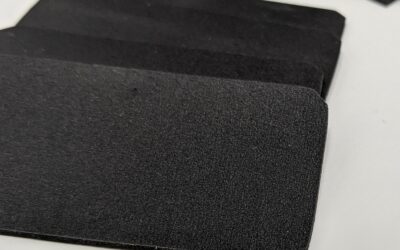
When a customer needs a gasket that will not take a permanent set after being compressed for months or years, the conversation almost always comes down to two materials: PORON urethane foam and silicone foam. Both are excellent, but they have different strengths. The...

Gasket Materials for Extreme Cold: Comparing Low Temperature Ranges
How low can gasket materials go? Every rubber material has a glass transition temperature, or Tg. Below that point, the polymer chains lock up and the material goes from flexible to glassy and brittle. When a gasket hits its Tg, it loses the ability to conform to...
Open Cell vs Closed Cell Soft Gaskets: Which Structure Seals Best?
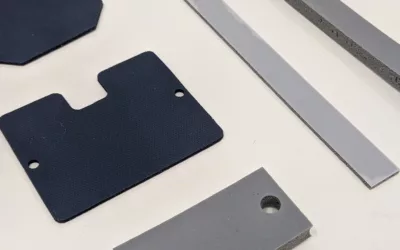
What is an open cell gasket? An open cell gasket is made from foam where the individual cell walls are broken or incomplete, so the cells interconnect like a sponge. Air and fluids can pass through the structure. This gives open cell foams their characteristic...

Fungus-Resistant Gaskets for Military and Marine Environments
At NEDC, fungus resistant gaskets are one of the more specialized product lines we cut, but they come up more often than you might think. Military equipment deployed in tropical environments, marine electronics housings on vessels that spend months in humid...

Silicone vs Silicone-Free vs Graphene Thermal Pads: Material Comparison for CPU Applications
The thermal pad material selected for CPU cooling affects performance, reliability, and long-term system integrity. Silicone-based pads are the default, but silicone-free alternatives address specific failure modes, and graphene pads represent an emerging third...

Phase-Change Thermal Pads for CPU Cooling: PTM7950 and Beyond
Phase-change thermal pads represent one of the most significant advancements in CPU thermal interface materials in recent years. They combine the installation simplicity of a thermal pad with the thermal performance of thermal paste, making them increasingly popular...

Compression Set in Gaskets: What It Is and How to Minimize It
Compression set is one of those properties that sounds technical but has a very real impact on whether your gasket still seals a year from now. At NEDC, we cut low compression set gaskets every day, and I have seen plenty of cases where a gasket material was chosen...

Thermal Pads for Laptops: Why Pad Thickness and Material Matter in Compact Designs
Laptop thermal pad selection is an engineering challenge that desktop cooling does not face. The combination of thin form factors, low mounting pressure, shared heatsinks, and flexible PCBs means that the pad material and thickness must be specified more carefully...

Laptop CPU Thermal Pads: Sizing, Selection, and Replacement Guide
Laptops present unique thermal management challenges. The CPU shares a confined space with the GPU, VRMs, memory, and battery, all generating heat in a chassis designed to be as thin as possible. Thermal pads for laptop CPUs must work in this constrained environment —...

Thermal Pads vs Thermal Paste: Longevity, Reliability, and Total Cost of Ownership
Most thermal pad vs thermal paste comparisons focus on thermal performance — which one transfers heat better. But for production managers, reliability engineers, and procurement teams, the more important questions are: which lasts longer, which is more reliable, and...

Low Temperature Gaskets: Silicone vs Fluorosilicone for Cryogenic Applications
One of the most common calls I get at NEDC is from an engineer who needs a low temperature gasket for an application that goes well below freezing. Sometimes it is an aerospace enclosure that will sit at 40,000 feet where temperatures can drop to -67F. Other times it...

Thermal Pad vs Thermal Paste for CPU: Which Is Better for Your Application?
The thermal pad vs thermal paste debate is one of the most common questions in CPU thermal management. Both transfer heat from the CPU to the heatsink, but they do so in fundamentally different ways. The right choice depends on the application — there is no universal...

Best CPU Thermal Pads for Industrial and Production Applications
Consumer “best thermal pad” lists focus on consumer CPUs and retail brands. But for engineers specifying thermal pads for server CPUs, embedded processors, industrial electronics, or production assembly lines, the requirements are fundamentally different....

CPU Thermal Pads: A Complete Guide to Selecting the Right Interface Material
CPU thermal pads are an alternative to thermal paste for transferring heat from a processor to its cooler. While thermal paste remains common in consumer builds, thermal pads offer advantages in production environments, field repair scenarios, and applications where...
Ultra-Soft Gasket Materials: PORON, Silicone Sponge, and When to Use Each
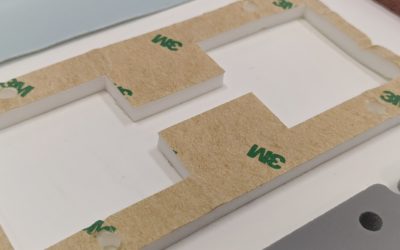
At NEDC, one of the most common requests we get is for an ultra soft gasket that can seal at very low compression pressures. Whether it is a medical device housing with thin plastic walls, an optical assembly that cannot tolerate high closure force, or a portable...

GPU Memory Thermal Pads: Why VRAM Cooling Matters and Which Pads to Use
GPU memory — whether GDDR6, GDDR6X, or HBM — generates significant heat during operation. Modern GDDR6X modules on high-end GPUs can draw 10-15 watts per module, and memory temperatures directly affect GPU performance, stability, and lifespan. Despite this, VRAM...

GPU VRM Thermal Pads: Selecting the Right Conductivity for Voltage Regulation Modules
The GPU core gets all the attention, but the voltage regulation modules (VRMs) are equally critical — and often run hotter. VRMs convert the 12V from the power supply down to the 0.8-1.2V the GPU core needs, and this conversion generates significant heat. Without...

When to Replace GPU Thermal Pads: Signs, Lifespan, and Preventive Maintenance
Thermal pads do not last forever. Over time, thermal cycling, mechanical compression, and material aging degrade their ability to transfer heat. Knowing when to replace GPU thermal pads — before they cause thermal throttling or component damage — is critical for...

How to Replace GPU Thermal Pads: A Step-by-Step Guide for Technicians and Engineers
Replacing thermal pads on a GPU is one of the most effective ways to reduce operating temperatures and extend the life of a graphics card. Whether the task involves a single card or a fleet of GPUs in a datacenter, the process requires care and the right materials....

Thermal Pad Sizes for GPUs: Measuring, Specifying, and Ordering Custom-Cut Pads
Replacing GPU thermal pads requires more than knowing the thickness — the exact length, width, and shape of each pad must be specified. A VRAM pad that is 15 mm x 15 mm will not work if the spec calls for 12 mm x 12 mm. Getting the dimensions right the first time...

GPU Thermal Pad Thickness Guide: Choosing the Right Millimeter Size for Your Card
Selecting the right thermal pad thickness for a GPU is one of the most common questions we get from engineers and technicians. Too thin, and the pad will not make contact between the component and heatsink. Too thick, and unnecessary thermal resistance is added that...
Graphics Card Thermal Pads: How to Source Custom Die-Cut Pads for Production Runs
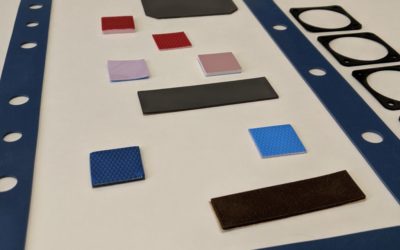
Most thermal pad content online targets individual consumers buying retail pads. But for engineers designing graphics cards, building GPU cooling assemblies, or sourcing thermal pads for production runs, the requirements are fundamentally different. The application...

GPU Thermal Pads: A Buyer’s Guide to Choosing the Right Material and Conductivity
Sourcing thermal pads for a GPU cooling application presents a wide range of material, conductivity, and thickness options. Between silicone and silicone-free materials, conductivity ratings from 1.5 W/mK to 24 W/mK, and thicknesses ranging from 0.5 mm to 2.0 mm,...

PK504 Thermal Pad: 5.0 W/m·K General Series Gap Filler for Cost-Effective Thermal Management
Not every thermal interface demands a premium, ultra-high-conductivity gap filler. In many mainstream electronics applications, the design challenge is finding a pad that balances solid thermal performance with the compressibility and conformability needed to fill...

AS50-s Thermal Pad: Fiberglass-Reinforced 5.0 W/m·K Gap Filler with Enhanced Mechanical Strength
LiPOLY's AS50-s is a fiberglass-reinforced thermal interface pad designed for applications where mechanical durability matters as much as thermal transfer. Most thermally conductive silicone pads are soft and conformable but can tear, puncture, or deform under...

PK605 Thermal Pad: 6.0 W/m·K General Series Gap Filler for Broad Thermal Management
Not every thermal interface application demands the highest conductivity on the market. Many designs need a reliable, well-balanced thermal pad that delivers solid heat transfer across a broad range of operating conditions, without the cost premium of...

DTT61-s Thermal Pad: Single-Phase Immersion Cooling Certified by Engineered Fluids
LiPOLY's DTT61-s is a thermal pad engineered specifically for single-phase immersion cooling environments, certified by Engineered Fluids for long-term resistance to dielectric coolant immersion. That certification is the key differentiator—most thermal pads on the...

PK700 Thermal Pad: 7.0 W/m·K General Series Gap Filler for Consumer Electronics
Consumer electronics and automotive systems are running hotter and packing more functionality into tighter enclosures. The thermal interface material between a heat source and its sink must bridge uneven gaps, maintain contact over thousands of thermal cycles, and do...

T-top81-s Thermal Pad: 8.0 W/m·K Entry-Level Extreme Series Gap Filler
Not every thermal interface application demands the highest conductivity available, but it still demands a pad that performs reliably under sustained heat load. The T-top81-s thermal pad from LiPOLY is the entry point into the Extreme Series, offering a genuine step...