
Custom Gaskets
Fluid/Fuel Resistant, Fungus Resistant, Temperature Resistant, Air Sealing Gaskets, and others
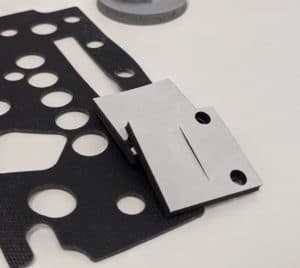
assortment of custom gaskets
Custom Gaskets are NEDCs main product. We manufacture different types of all different environments, and industries.
What are Gaskets?
What Are The Questions to Ask When Choosing a Gasket Material?
Function/Requirements
Gaskets can be subject to a number of different environmental concerns/stresses. There can be quite a few potential concerns when choosing a gasket.
-Whether the gasket will be subject to fluids such as oil, fuel, brake-fluid, or other fluids?
-If the gaskets will do a lot of temperature cycling from low temperatures to high temperatures, or possibility a variety of both?
-How much compression the gasket will be subject to?
-Whether the gasket will be exposed to ozone, and UV?
-EMI/RFI shielding requirements of the gaskets, or if the gasket needs to be conductive, antistatic?
-Whether the gasket will require an adhesive backing?
These questions lead into what selections are available out in the industry for solutions. At NEDC, we are familiar with many of the selections available.
Polymers/Availability for Custom Gaskets
Availability usually comes down to the same questions as above to start boiling down the potential solutions.
There are:
-High Temperature, and Low Temperature Gaskets -Flame Retardant Gaskets
-UV Resistant Gaskets -Fuel Resistant Gaskets
-Low Compression Set Gaskets -Ozone Resistant Gaskets
-Soft/Hard Gaskets -Electrically Conductive Gaskets
Materials/Composites Available
The above types of gaskets are made up of a combination of different types of polymers/composites/rubbers. Many of these materials can be provided in cellular form such as sponge or foam rubber materials. These selections include:
-Viton Rubber(Fluoroelastomer) FKM -Fluorosilicone Rubber (FVMQ)
-Urethane Rubber -Nitrile Rubber
-SBR Rubber -Epichlorohydrin Rubber
And more
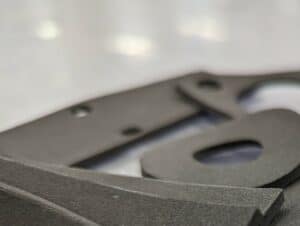
custom dust gasket
custom dust gasket
Types of Gaskets Available?
With all of these different types of gasketing materials, and quesitons- what kind of custom gaskets are produced?
-Dust Gaskets -High Heat Gaskets(Heat Resistant Gaskets) -Thermal Gaskets – Food Grade Gaskets – RFI/EMI Gaskets – Canister Gaskets – Furnace Gaskets – Plenum Gaskets – Electrical Outlet Gaskets – Flange Gaskets – Speaker Gaskets – Outdoor Light Fixture Gaskets – Transformer Gaskets – Vacuum Gaskets – Recessed Lighting Gaskets – Air Compressor Gaskets – Solar Panel Gaskets- Speaker Baffle Gaskets
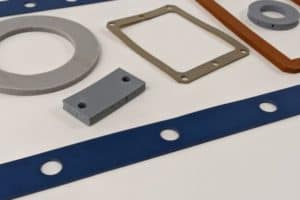
more custom gaskets
more custom gaskets
More Availability of Custom Gaskets
The availability goes one step further with all of the different solutions that branch out. There are plastic gaskets, sponge/foam gaskets, and VHB Tape Gaskets.
VHB Tape Gaskets
VHB Gaskets refer to VHB Tape materials provided by 3M cut into shapes that offer gasketing solutions. They are used in place of permanent fasteners. The time saved in assembly and processing can be dramatically cut down with VHB. The reason these acrylic foam tapes are used is because they offer great permanent bonding strength. In addition, they can seal out many mediums such as dust or water when properly applied. These tapes are commonly used on computer like tablets. These acrylic foam tapes include ultra thin and thick options to accommodate different applications. There are countless families of VHB Tapes to chose from. The main VHB Tape families are 4941, 5952, and RP Tapes. However, there are quite an assortment of options, including high temperature options, low temperature options, powder coated surface adhering options, and more.
Sponge/Foam Gaskets
Sponge/foam gaskets include cellular products that allow for less compression force. It is normally required to have significant pressure to seal out different medias properly. These materials have been chemically, or otherwise expanded. However, they are commonly made out of the same base materials as many solid rubber gasketing options. Some examples of foam/sponge gaskets include silicone sponge, fluorosilicone sponge, neoprene sponge, PORON®(urethane foam), or sponge blends. Sponge and foam gaskets are highly customizable. Some examples of that include thermally conductive options, electrically conductive options, and ultra-soft/firm options.
Commonly known cellular foam/sponge products include:
–Silicone Sponge Products such as NORSEAL® R10400, R10450, R10460, R10470, R10480, and R10490 by Saint Gobain Performance Plastics.
-PORON® Urethane Foams by Rogers Corporation. PORON® has a huge variety of thicknesses, densities, and firmnesses available for purchase.
–Silicone Foam Products such as BISCO® HT-800, HT-820, HT-840, and HT-870 by Rogers Corporation.
-Electrically Conductive Products such as Condux Plus™ from Rogers.
-Thermally Conductive Products such as Thermacool R10404 from Saint Gobain.
Plastic Gaskets
There are times that gaskets are made out of plastic materials instead of elastomeric ones. Some materials used include PTFE(Teflon), Nylon, UHMW, G10 Epoxyglass, and more. These materials are cut out of flat sheet materials by NEDC. As a result, the plastic we cut is usually relatively thin due to the fact we are cutting through it with either a die, laser, or a water stream.
Gasketing for UL Rated Applications
For applications that require a UL listed material- there are many options to chose from. Many of the big manufacturers/OEMs have sent out their products to become UL listed for either sealing(UL 157), flame retardancy(UL 94), or safety in control panels(UL508)
Tape Backings(Pressure Sensitive Adhesive)
With custom gaskets tape backings are available. These help with assembly. Many different types of peel and stick options are available. Oftentimes NEDC will apply acrylic pressure sensitive tape such as 3M 9472, or 9485PC. These high-performance acrylics stick well to most high-surface energy substrates. However, silicone pressure sensitive adhesive options are also available.
Thickness Tolerancing for Sheeted Goods for Gasket Products
Gaskets are meant to be compressed. Sponge/Foam Gasketing materials compress more with less pressure then their solid rubber gasketing material counterparts. When adding a material to a print- the thickness tolerance can come from a few different places.
-The Print has a thickness tolerance demanding by the application- oftentimes this ends up being more stringent than is available commercially, easily.
-The Specification associated with the material. For example, AMS-3195, a silicone sponge specification has thickness tolerancing associated with it.
-If no tolerance is specified- its usually assumed that RMA tolerances apply. Below we have added a table of RMA thickness tolerances for sponge/rubber.
About NEDC
NEDC is a die-cutting manfacturer, and supplier of various cut products that utilizes waterjet cutting, laser cutting, and die-cutting to cut the above listed materials into custom gaskets. If you have an application that you believe could utilize a custom manufactured gasket, please contact sales@nedc.com.
BISCO® & PORON® are registered Trademarks of Rogers Corporation.
NORSEAL® is a registered Trademark of Saint Gobain Performance Plastics.
Gaskets Blog
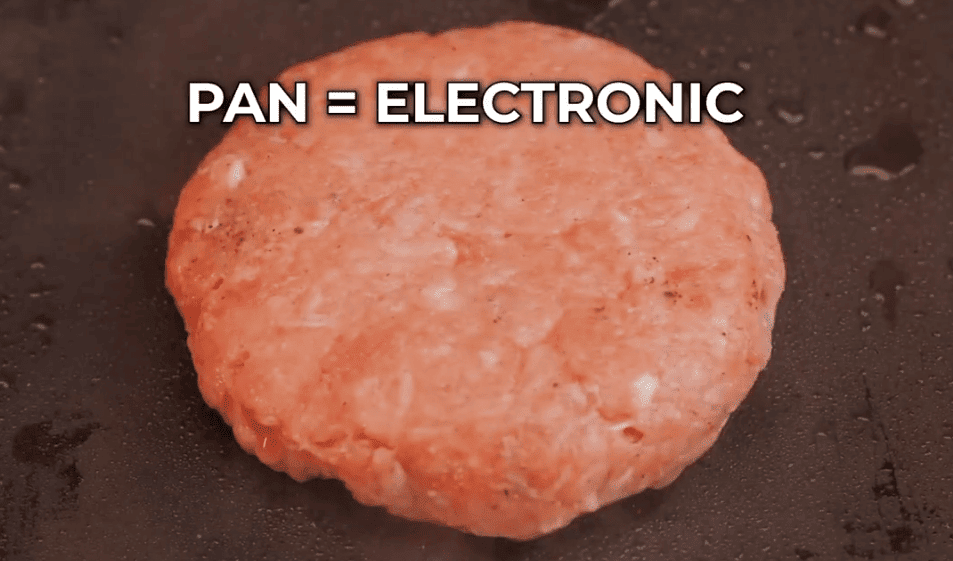
NEDC Introduces First Thermal Pad Experiment Video
This video shows how a thermal pad actually works with the analogy of cooking.
Previous Posts
HPMS Graphite | Flexible Graphite | Custom Die-Cut Parts
At NEDC, we like to think we are experts in thermal interface materials. ...
Are Electrically Conductive Gaskets, Thermally Conductive ? | A Test Analysis
Recently, we procured a thermal performance testing machine. I thought...
Thin Gasketing Options | .015”, & Below | High Performance Gaskets
Applications get smaller, and smaller everyday. As footprints of the...
T-Global Technology | Thermal Gap Pads | Thick, Thin, High W/m-K
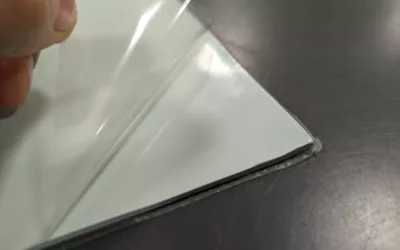
At NEDC, thermal pads are our specialty. Our manufacturing site is in Methuen, MA. Across the pond, in the United Kingdom, there is a reputable thermal pad manufacturer. This manufacturer is called T-Global Technology. They make a number of thermal interface...
EMI/RFI Bulb/Hollow Gaskets – The Softest EMI/RFI Gasket
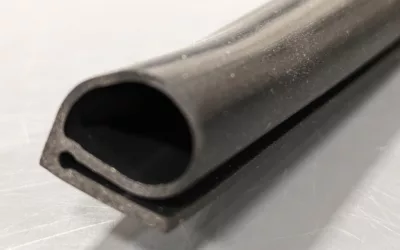
At NEDC, we mostly die-cut, knife-cut, or waterjet cut gaskets. However, we do also fabricate, glue, or bond together some gaskets. Why do we do this? The short answer is because we cannot die cut, or waterjet cut them. However, sometimes it's also for performance...
Low Durometer/Soft EMI/RFI Gaskets – 30A, 40A, 50A Gasketing
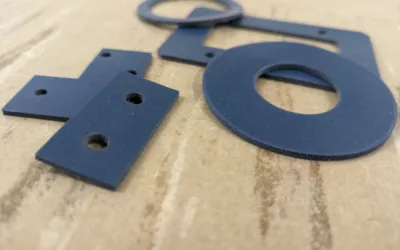
For years, NEDC has supplied low durometer gasketing materials to customers. One product that I realized has been underutilized the last few years is “low durometer EMI Gasketing”. On this website, we are making a large push to show we are a gasket manufacturer who...
Nickel Coated Aluminum Gaskets | EMI Gaskets | Corrosion Resistant Gaskets
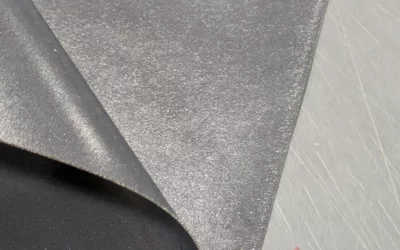
EMI Gaskets are not a new technology. They have been around for the last 60 years. However, once in a while a new technology emerges for a different type of foam, or a different type of orientation of materials. Over the last few years, a new type of particle has...

Applications: Scanner, PDDs, Analyzers – Gaskets, Pads, Thermal Pads
At NEDC, we manufacture an incredible array of applications. In today's blog, I thought I’d talk about something we’ve all interacted with at some point. In today's world, we are trying to have the data at our fingerprints all the time. Some of these mobile devices...

Silicone Rubber Gasketing, Peroxide vs. Platinum Cured
Customers buy all sorts of silicone rubber gaskets. In fact, silicone rubber gasketing materials are some of our most popular materials we sell to customers. Of course, theres all sorts of silicone rubber materials. Customers sometimes ask if one is better than the...
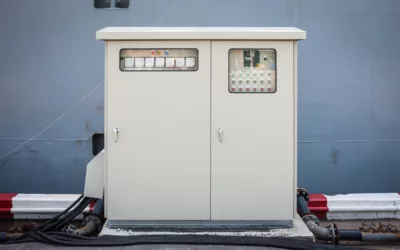
Why Commercial EMI/RFI Gasketing | Custom Die-Cut EMI Gaskets
At NEDC, we sell gaskets, lots of them. I would love nothing better than to sell a fully loaded pure silver gasket. Love it. However, I’ll be honest, I don’t think that's necessary most times. When customers have all the money in the world to spend, sometimes I wish...

LOCTITE® Thermstrate 2000 aka TCF 1000AL | Die-Cutting/Converting
At this point, I’ve written 250 blogs on this website- I know, I am even like, how much of a thermal pad geek am I? Why did I ask this question? I was curious if I have written a blog about LOCTITE® Thermstate 2000 Phase Change material. At one point, we had written a...
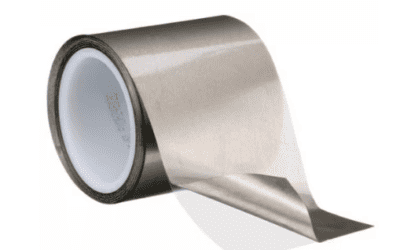
Long Shelf Life Electrically Conductive Single/Double | EMI Shielding Tapes
We are a 3M converter, and if I’m being honest, I don’t throw a party everytime they come out with a new product. I like new copper foil products, and new VHB Tapes just like the next guy, but nothing gets me going like: “LONGER SHELF LIFE ELECTRICALLY CONDUCTIVE...
Pure EMI Silver Gaskets, Are They Needed?
Customers ask me for material selection recommendations all the time. One way I believe I build trust with clients is, I don’t upsell things I don’t need to. Customers literally once a week call and say, I NEED VITON! Oftentimes my response is “Hey, I’ll sell you...

TGON 800 Series | 805, 810, 820 | Electrically Conductive Thermal Pad
The TIM world is like the big bang.. It moves, and expands faster than ever. The reasoning for this is the fact that clock rates continue to expand and move even more rapidly. In this world, graphite is a TIM of choice because of a few features. Its available in thin...
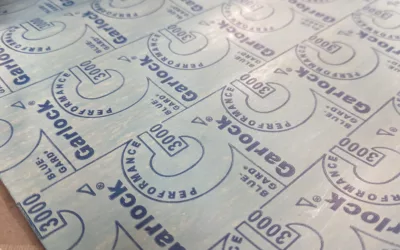
Garlock BLUE-GARD Gasketing Options | Waterjet/Die-Cutting
At NEDC, engineered options are our thing. In this blog, we wanted to discuss all of the Garlock options that are under the BLUE-GARD® brand. These materials are non-asbestos, aramid fiber gaskets that are compressed with different binders. Popular Garlock BLUE-GARD®...
All of the information presented above is believed to be factual and accurate; however, NEDC is not liable for any design or application utilizing this information.
New England Die Cutting
Capabilities/Products
Quick Links
Popular Blog Posts
NEDC Introduces First Thermal Pad Experiment Video
This video shows how a thermal pad actually works with the analogy of cooking.
Frozen Epoxy Films in Stock at NEDC!
NEDC is a converter of frozen epoxy films to make custom preforms for customers to buy. For that reason, NEDC has many frozen films in stock. These include: Ablefilm 5025E Ablefilm 561K Ablefilm CF3350 Ablefilm 566K And others. We wanted to just get it out there on...
Pure EMI Silver Gaskets, Are They Needed?
Customers ask me for material selection recommendations all the time. One way I believe I build trust with clients is, I don’t upsell things I don’t need to. Customers literally once a week call and say, I NEED VITON! Oftentimes my response is “Hey, I’ll sell you...

©New England Die Cutting 2023