
One of the most common calls I get at NEDC is from an engineer who needs a low temperature gasket for an application that goes well below freezing. Sometimes it is an aerospace enclosure that will sit at 40,000 feet where temperatures can drop to -67F. Other times it is a military device deployed to the Arctic. And sometimes it is an industrial cryogenic application where the gasket needs to survive -100F or lower. In every case, the question is the same: which material will stay flexible and maintain a seal at those temperatures? For a full overview, see our low temperature gaskets pillar page. In this post, I will compare the two most common materials we cut for these applications: silicone and fluorosilicone.
Understanding glass transition temperature in gasket materials
The key property to understand when selecting a cold temperature seal is glass transition temperature, or Tg. Tg is the temperature at which an elastomer transitions from a flexible, rubbery state to a rigid, glassy state. Below Tg, the material becomes brittle and can no longer deform enough to maintain a seal. If your gasket material reaches its Tg in service, the seal will fail.
For silicone and fluorosilicone, Tg is around -80F to -100F depending on the specific compound. This is significantly lower than most other elastomers. Nitrile (Buna-N), for comparison, has a Tg around -30F to -40F for standard grades, though special low-temperature nitrile compounds can push that to -65F. EPDM sits in the -40F to -60F range. This is why silicone and fluorosilicone are the go-to materials for true cryogenic gasket applications.
Silicone gaskets for low temperature sealing
Silicone gaskets are the workhorse of low temperature sealing. With a Tg around -80F to -100F, standard silicone compounds remain flexible well below what most other elastomers can handle. We cut silicone gaskets in solid, sponge, and foam forms, and all three perform well at low temperatures.
For low temperature silicone gasket applications, the key specifications we see are ASTM D2137 (low temperature brittleness), AMS-3334 and AMS-3335 (aerospace material specifications for silicone sponge), and A-A-59588 (the federal specification for silicone rubber). These specifications ensure the material has been tested and verified for low temperature flexibility. For more detail on specific silicone materials for cold environments, see our low temperature silicone gaskets page.
Silicone also has excellent high temperature performance, which means a single gasket material can handle a wide temperature range. If your application cycles between extreme cold and elevated heat, high temperature gaskets in silicone can cover the full range.
Fluorosilicone gaskets for cryogenic applications
Fluorosilicone gaskets offer the same low temperature flexibility as standard silicone but add resistance to fuels, oils, and solvents. The Tg of fluorosilicone is comparable to standard silicone, around -80F to -100F, so it performs equally well in cryogenic applications.
The main reason to choose fluorosilicone over standard silicone is fluid exposure. If your gasket will be in contact with aviation fuel, hydraulic fluid, or petroleum-based lubricants at low temperatures, fluorosilicone is the right choice. Standard silicone swells and degrades in the presence of these fluids, while fluorosilicone resists them. The trade-off is cost: fluorosilicone is significantly more expensive than standard silicone, often 3 to 5 times the material cost. If you do not need the chemical resistance, standard silicone is the more economical choice.
Fluorosilicone is commonly specified in aerospace and military applications where both fuel resistance and cryogenic temperature performance are required. For applications that also involve soft gasket requirements, see our soft gaskets page.
Other cold temperature seal materials
While silicone and fluorosilicone are the best choices for true cryogenic applications, other materials work for moderately low temperatures. EPDM handles temperatures down to about -40F to -60F and has excellent water and steam resistance. Nitrile (Buna-N) in standard grades handles down to about -30F to -40F, with special low-temperature nitrile compounds reaching -65F. For military applications that also require fungus resistance, fungus resistant gaskets in EPDM or Neoprene may be specified.
Testing standards for low temperature gaskets
Several ASTM standards are used to verify low temperature gasket performance:
- ASTM D1329 (TR10/TR70): This is the temperature retraction test. A sample is stretched, frozen, and then warmed while the recovery is measured. TR10 is the temperature at which the sample retracts 10% of its stretched length, and TR70 is the temperature at which it retracts 70%. TR10 is a good indicator of the lowest temperature at which the material will still function as a seal.
- ASTM D2137: This tests the low temperature brittleness of rubber and sponge materials. The sample is bent at a specified low temperature and checked for cracking.
- ASTM D2000 suffix F and F17: In the ASTM D2000 specification system, the suffix F calls out low temperature requirements. F17 specifically defines a test temperature for the material.
Choosing the right cold temperature seal
When I help a customer select a cold temperature seal, I start with four questions: What is the minimum operating temperature? Will the gasket be exposed to fuels or oils? Does the application cycle between temperature extremes? And what compression force is available? The answers usually point to a clear material choice. For most cryogenic gasket applications without fluid exposure, standard silicone is the answer. For fuel or oil exposure at cryogenic temperatures, fluorosilicone is the answer. For moderately cold applications without fluids, EPDM or nitrile may suffice.
More information on low temperature gaskets
If you need help selecting the right low temperature gasket material for your application, or if you need gaskets cut to a specific specification (ASTM D2137, ASTM D1329, MIL-STD, or AMS), contact us at sales@nedc.com. We have been cutting low temperature gaskets for over 30 years for aerospace, military, and energy applications, and we can help you navigate the material selection process.
FAQ
What is the best gasket material for cryogenic temperatures?
Silicone and fluorosilicone are the best gasket materials for cryogenic temperatures. Both have glass transition temperatures around -80F to -100F and retain their flexibility well below 0F. For applications with fuel or oil exposure, fluorosilicone is preferred. For general cryogenic sealing without fluid exposure, standard silicone is more cost-effective and performs equally well at low temperatures.
What is the difference between silicone and fluorosilicone for low temperature gaskets?
Silicone and fluorosilicone have similar low temperature performance (Tg around -80F to -100F), but fluorosilicone adds resistance to fuels, oils, and solvents. Standard silicone degrades when exposed to petroleum-based fluids, while fluorosilicone resists them. The trade-off is cost: fluorosilicone is 3 to 5 times more expensive than standard silicone. Choose fluorosilicone when fuel or oil resistance is required at low temperatures; choose standard silicone when it is not.
How are low temperature gaskets tested?
Low temperature gaskets are tested using ASTM D1329 (temperature retraction, TR10 and TR70), ASTM D2137 (low temperature brittleness), and ASTM D2000 suffix F (low temperature requirement callout). TR10 indicates the lowest temperature at which the material still retracts and can function as a seal. ASTM D2137 checks whether the material cracks when bent at a specified low temperature. These tests verify that the gasket material will remain flexible enough to maintain a seal at the target operating temperature.
Can EPDM be used for low temperature gaskets?
EPDM can be used for low temperature gaskets down to about -40F to -60F. It is a good choice for moderately cold applications that also require water and steam resistance. However, for true cryogenic applications below -60F, silicone and fluorosilicone are better choices because their Tg is significantly lower (-80F to -100F). EPDM also has excellent ozone and weather resistance, which makes it suitable for outdoor applications in cold climates.
One of the most common calls I get at NEDC is from an engineer who needs a low temperature gasket for an application that goes well below freezing. Sometimes it is an aerospace enclosure that will sit at 40,000 feet where temperatures can drop to -67F. Other times it is a military device deployed to the Arctic. And sometimes it is an industrial cryogenic application where the gasket needs to survive -100F or lower. In every case, the question is the same: which material will stay flexible and maintain a seal at those temperatures? For a full overview, see our low temperature gaskets pillar page. In this post, I will compare the two most common materials we cut for these applications: silicone and fluorosilicone.
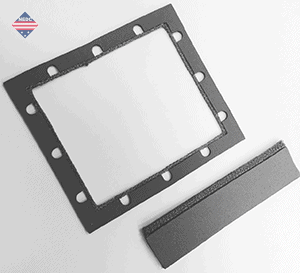
Gray Silicone Sponge Gaskets with Mesh Strip
Understanding glass transition temperature in gasket materials
The key property to understand when selecting a cold temperature seal is glass transition temperature, or Tg. Tg is the temperature at which an elastomer transitions from a flexible, rubbery state to a rigid, glassy state. Below Tg, the material becomes brittle and can no longer deform enough to maintain a seal. If your gasket material reaches its Tg in service, the seal will fail.
For silicone and fluorosilicone, Tg is around -80F to -100F depending on the specific compound. This is significantly lower than most other elastomers. Nitrile (Buna-N), for comparison, has a Tg around -30F to -40F for standard grades, though special low-temperature nitrile compounds can push that to -65F. EPDM sits in the -40F to -60F range. This is why silicone and fluorosilicone are the go-to materials for true cryogenic gasket applications.
Silicone gaskets for low temperature sealing
Silicone gaskets are the workhorse of low temperature sealing. With a Tg around -80F to -100F, standard silicone compounds remain flexible well below what most other elastomers can handle. We cut silicone gaskets in solid, sponge, and foam forms, and all three perform well at low temperatures.
For low temperature silicone gasket applications, the key specifications we see are ASTM D2137 (low temperature brittleness), AMS-3334 and AMS-3335 (aerospace material specifications for silicone sponge), and A-A-59588 (the federal specification for silicone rubber). These specifications ensure the material has been tested and verified for low temperature flexibility. For more detail on specific silicone materials for cold environments, see our low temperature silicone gaskets page.
Silicone also has excellent high temperature performance, which means a single gasket material can handle a wide temperature range. If your application cycles between extreme cold and elevated heat, high temperature gaskets in silicone can cover the full range.
Fluorosilicone gaskets for cryogenic applications
Fluorosilicone gaskets offer the same low temperature flexibility as standard silicone but add resistance to fuels, oils, and solvents. The Tg of fluorosilicone is comparable to standard silicone, around -80F to -100F, so it performs equally well in cryogenic applications.
The main reason to choose fluorosilicone over standard silicone is fluid exposure. If your gasket will be in contact with aviation fuel, hydraulic fluid, or petroleum-based lubricants at low temperatures, fluorosilicone is the right choice. Standard silicone swells and degrades in the presence of these fluids, while fluorosilicone resists them. The trade-off is cost: fluorosilicone is significantly more expensive than standard silicone, often 3 to 5 times the material cost. If you do not need the chemical resistance, standard silicone is the more economical choice.
Fluorosilicone is commonly specified in aerospace and military applications where both fuel resistance and cryogenic temperature performance are required. For applications that also involve soft gasket requirements, see our soft gaskets page.
Other cold temperature seal materials
While silicone and fluorosilicone are the best choices for true cryogenic applications, other materials work for moderately low temperatures. EPDM handles temperatures down to about -40F to -60F and has excellent water and steam resistance. Nitrile (Buna-N) in standard grades handles down to about -30F to -40F, with special low-temperature nitrile compounds reaching -65F. For military applications that also require fungus resistance, fungus resistant gaskets in EPDM or Neoprene may be specified.
Testing standards for low temperature gaskets
Several ASTM standards are used to verify low temperature gasket performance:
- ASTM D1329 (TR10/TR70): This is the temperature retraction test. A sample is stretched, frozen, and then warmed while the recovery is measured. TR10 is the temperature at which the sample retracts 10% of its stretched length, and TR70 is the temperature at which it retracts 70%. TR10 is a good indicator of the lowest temperature at which the material will still function as a seal.
- ASTM D2137: This tests the low temperature brittleness of rubber and sponge materials. The sample is bent at a specified low temperature and checked for cracking.
- ASTM D2000 suffix F and F17: In the ASTM D2000 specification system, the suffix F calls out low temperature requirements. F17 specifically defines a test temperature for the material.
Choosing the right cold temperature seal
When I help a customer select a cold temperature seal, I start with four questions: What is the minimum operating temperature? Will the gasket be exposed to fuels or oils? Does the application cycle between temperature extremes? And what compression force is available? The answers usually point to a clear material choice. For most cryogenic gasket applications without fluid exposure, standard silicone is the answer. For fuel or oil exposure at cryogenic temperatures, fluorosilicone is the answer. For moderately cold applications without fluids, EPDM or nitrile may suffice.
More information on low temperature gaskets
If you need help selecting the right low temperature gasket material for your application, or if you need gaskets cut to a specific specification (ASTM D2137, ASTM D1329, MIL-STD, or AMS), contact us at sales@nedc.com. We have been cutting low temperature gaskets for over 30 years for aerospace, military, and energy applications, and we can help you navigate the material selection process.
FAQ
What is the best gasket material for cryogenic temperatures?
Silicone and fluorosilicone are the best gasket materials for cryogenic temperatures. Both have glass transition temperatures around -80F to -100F and retain their flexibility well below 0F. For applications with fuel or oil exposure, fluorosilicone is preferred. For general cryogenic sealing without fluid exposure, standard silicone is more cost-effective and performs equally well at low temperatures.
What is the difference between silicone and fluorosilicone for low temperature gaskets?
Silicone and fluorosilicone have similar low temperature performance (Tg around -80F to -100F), but fluorosilicone adds resistance to fuels, oils, and solvents. Standard silicone degrades when exposed to petroleum-based fluids, while fluorosilicone resists them. The trade-off is cost: fluorosilicone is 3 to 5 times more expensive than standard silicone. Choose fluorosilicone when fuel or oil resistance is required at low temperatures; choose standard silicone when it is not.
How are low temperature gaskets tested?
Low temperature gaskets are tested using ASTM D1329 (temperature retraction, TR10 and TR70), ASTM D2137 (low temperature brittleness), and ASTM D2000 suffix F (low temperature requirement callout). TR10 indicates the lowest temperature at which the material still retracts and can function as a seal. ASTM D2137 checks whether the material cracks when bent at a specified low temperature. These tests verify that the gasket material will remain flexible enough to maintain a seal at the target operating temperature.
Can EPDM be used for low temperature gaskets?
EPDM can be used for low temperature gaskets down to about -40F to -60F. It is a good choice for moderately cold applications that also require water and steam resistance. However, for true cryogenic applications below -60F, silicone and fluorosilicone are better choices because their Tg is significantly lower (-80F to -100F). EPDM also has excellent ozone and weather resistance, which makes it suitable for outdoor applications in cold climates.