Epoxy Films, Adhesive Preforms
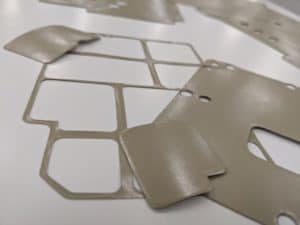
Epoxy Adhesive Preforms define custom parts that are cut out of an adhesive film material that can come either thermally conductive, or electrically conductive. However, oftentimes they come as both. In addition, some of these films are supported by carriers. These include fiberglass or polyimide films to ease in handling and assembly. Epoxy preforms offer an alternative to conductive thermal pastes that can be difficult for assembly.
Benefits of Epoxy Films
Cleanliness and Cleanup
With epoxy films, since these films can be preformed to shape it minimizes the amount of post-cleaning that is required to be done before, and after bonding is completed.
Consistency of Application
Conductive Thermal Pastes can be inconsistent for the sole reason of how its applied. Depending on who/how it is applied. On the other hand premade epoxy preforms are made the same way every-time. The thickness, cut-outs, and tolerances of the preform can all be held to +/- .002” in some cases.
No Mixing Time
Since Epoxy Preforms are 1 part pre-cut parts, there is no need to mix anything unlike some of the conductive thermal pastes available.
Overall, epoxy preform film materials add a lot of consistency and can lower cost per unit of production.
Benefits/Drawback of Supported Epoxy Films
Benefits:
1. Handling
I cannot begin to overstate how much easier handling is with a carrier. Unsupported films can fall apart in your hands because of the lack of support. Cutting should be done on the liners, or with the support of something at all times.
Drawbacks:
1. Cutting
Cutting can be a bit more of a challenge with a supported epoxy film. The reason for this is laser cutting is the preferred method of cutting for complex epoxy shapes. Polyimide or fiberglass can make the cut a little rougher or harder to cut through.
Epoxy Preforms
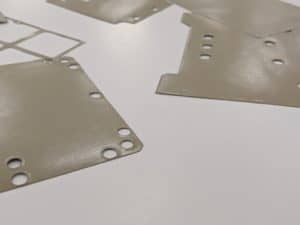
The material being preformed allows allows for more uniform bond lines and consistent application of the adhesive across the assembly. When there is many cut-outs and close tolerancing using automated machines can offer an incredible amount of consistency. Applications such as bonding to heat-sinks are common for these films. These epoxy films can be laser-cut or die-cut.
Availability of Epoxy Film Materials
Henkel manufactures a number of assembly film options that may be a fit for different applications that require epoxy preforms:
Electrically/Thermally Conductive Films
ECF561E ™
CF3350 ™
ECF550 ™
ECF563 ™
Thermally Conductive Films
5020K ™
561K ™
566K ™
563K ™
506 ™
Epoxy Film Preforms
It is wise to consulate about epoxy film sheet sizes before determining sizes of preforms. With these materials tightly controlled performance characteristics and thickness tolerances availability of size can be tricky.
Storage
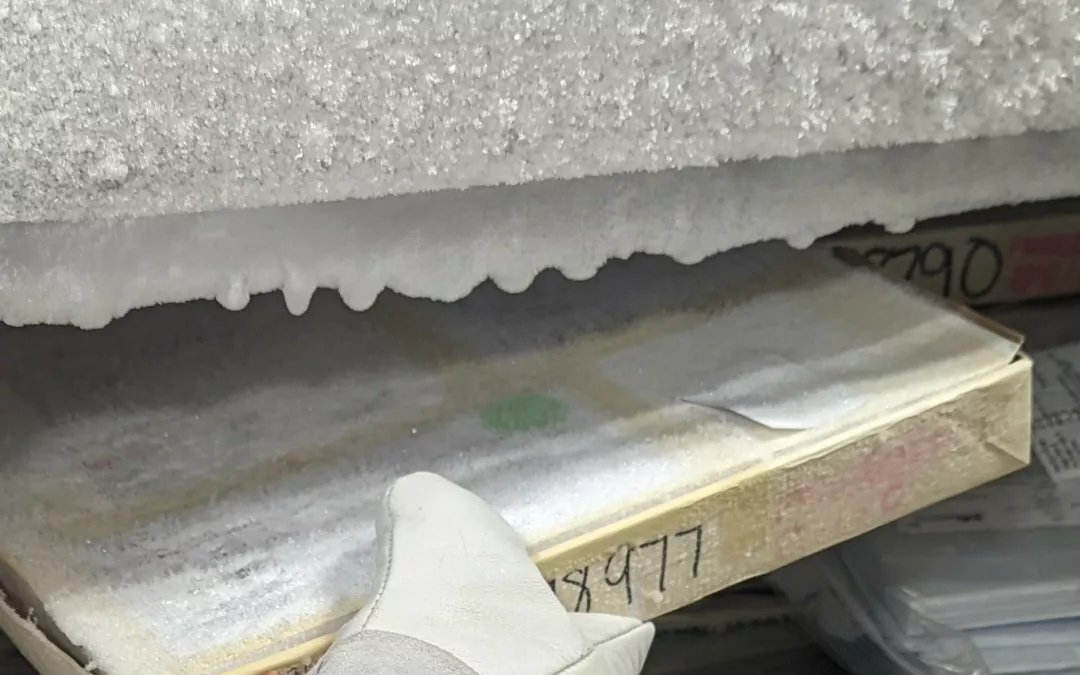
Storage is an important consideration with these films. Oftentimes these films are required to be stored at temperatures at freezing or sub-freezing in order to maximize the shelf life. This includes when shipping these materials that they are shipped at temperatures required by their datasheets. Our team generally refers to two different types of ice. There is Blue Ice and there is Dry Ice. Blue Ice keeps the package at around 30-45°F, and Dry Ice keeps the package sub-zero fahrenheit.
Converting
At NEDC, we laser-cut or die-cut epoxy preforms to many different custom shapes for our customers. Epoxy Preforms are usually very intricate with many twists, and turns in the cuts. With these challenges, choosing between die-cutting or laser cutting is a tough choice sometimes.
The delineation between laser-cutting or die cutting is often stratified by a number of factors including:
-Complexity of the cut-outs
-How many preforms are being manufactured
-How big/small the preform is
-Tolerance requirements(recommended +/- .003’’ for cutouts, +/- .005’’ for locations)*
If you have an application that you believe could utilize preforms or assembly films, please contact sales@nedc.com.
Epoxy Films Blog
Die-Cutting vs Laser Cutting, Epoxy Preforms: Part 2
I had a customer call the other day, saying he heard that laser cutting was better than die-cutting for frozen epoxy preforms. Heres the thought I had in my head “Why does this keep coming up!?” Heres my thought, and then I’m going dive into every advantage, and...
Previous Posts
Developments/Challenges at NEDC in 2022
At NEDC, we closed a strong 2022. However, it was not all sunshine, and...
Henkels’ CF3350 Epoxy Film Preforms | Laser-Cutting/Die-Cutting
At NEDC, we cut epoxy preforms films regularly through die-cutting and...
Laser-Cutting Epoxy Preforms Vs. Die Cutting | Some Thoughts
At NEDC, we are a build to print vendor. In my few years here,(7 if we're...
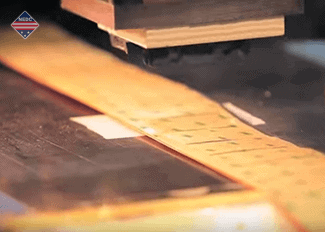
Kiss Cut Die Cut Parts
Nowadays everyone is trying to do everything faster. Make coffee faster, make cars fasters, make the computer that I am typing on faster. Some feedback that we often get from customers is, “These parts are so small, or so awkwardly shaped that removing the liner from...
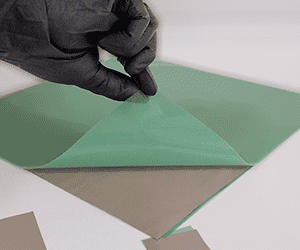
Laser & Die Cutting Ablefilms
NEDC offers many types of materials, including electrically insulating materials, thermally conductive materials, and electrically conductive materials. A brand that deals with all of those types of materials in adhesive film form is Henkel Adhesive Films. These...
All of the information presented above is believed to be factual and accurate; however, NEDC is not liable for any design or application utilizing this information.
New England Die Cutting
Capabilities/Products
Quick Links
Popular Blog Posts
Can you use a Thermal Pad/Gap Pad more than Once?
My blogs largely originated from the various questions I have gotten from customers over the years. This includes the most popular ones. One question I realized I get an awful lot is : “Are Gap Pads Reusable?” Heres my short answer, “It depends, but I wouldn’t ever”....
Die-Cutting vs Laser Cutting, Epoxy Preforms: Part 2
I had a customer call the other day, saying he heard that laser cutting was better than die-cutting for frozen epoxy preforms. Heres the thought I had in my head “Why does this keep coming up!?” Heres my thought, and then I’m going dive into every advantage, and...
Super-Soft Silicone Rubber Gaskets | Tight-Tolerance/High-Temperature
At NEDC, Custom Silicone Rubber Gaskets are a common product we sell. Included in that category are the Super-Soft Silicone Rubber Gaskets that are available. When I think soft gaskets, typically below 40A durometer would be considered soft. However, when I think of...

©New England Die Cutting 2023