
Why EPDM and Neoprene dominate fungus resistant gasketing
Fungus resistant gaskets are required in environments where moisture, humidity, and organic material are present. Fungi can colonize natural rubber and some synthetic materials, breaking down the polymer and compromising the seal. EPDM and Neoprene are both fully synthetic polymers that do not contain the nutrients fungi need to grow. Both are tested to ASTM G21, which evaluates fungal resistance of polymers, and both can meet MIL-STD-810 Method 508. A rating of 0 on ASTM G21 means no fungal growth, and both materials typically achieve that.
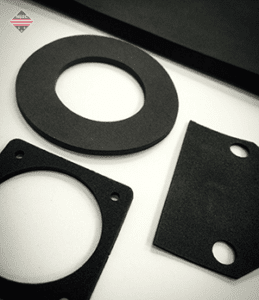
EPDM for fungus resistant gaskets
EPDM (ethylene propylene diene monomer) is one of my go-to recommendations for fungus resistant gasketing, especially in outdoor and marine applications. EPDM is naturally fungus resistant because the polymer backbone contains no sites that fungi can metabolize. In ASTM G21 testing, EPDM typically rates a 0, meaning no fungal growth observed. Beyond fungus resistance, EPDM brings excellent water, UV, and ozone resistance, making it ideal for outdoor environments where all three are present. We cut EPDM gaskets in both solid and foam/sponge forms. EPDM can be specified under ASTM D1056 for sponge grades and ASTM D2000 for solid compounds. For soft gasket applications that also need fungus resistance, EPDM sponge is a strong contender.
Neoprene for fungus resistant gasketing
Neoprene (polychloroprene) is the other major player in fungus resistant gasketing. Neoprene is a synthetic rubber that does not support fungal growth, though its fungus resistance can vary somewhat depending on the compound and additives. Neoprene is commonly tested to MIL-STD-810 Method 508 for military applications, and has a long history of use in military grade gasket applications. The key advantage Neoprene has over EPDM is oil and fuel resistance. EPDM degrades when exposed to petroleum-based oils and fuels, while Neoprene handles them well. If your gasket needs fungus resistance plus oil, fuel, or hydraulic fluid exposure, Neoprene is the better choice. We cut Neoprene gaskets in both solid and sponge forms. Neoprene is also used in some EMI shielding gaskets where a conductive layer is combined with an environmental seal.
EPDM vs Neoprene: side by side comparison
|
Property |
EPDM |
Neoprene |
|---|---|---|
|
Fungus resistance (ASTM G21) |
Rating 0, excellent |
Good to excellent, varies by compound |
|
Water resistance |
Excellent |
Good |
|
UV and ozone resistance |
Excellent |
Moderate |
|
Oil and fuel resistance |
Poor |
Good |
|
Low temperature flexibility |
Good, -40F to -60F |
Moderate, -20F to -40F |
|
Cost |
Generally lower |
Moderate |
|
Availability |
Solid, sponge, foam |
Solid, sponge |
|
Mil-spec callouts |
ASTM D2000 line callouts |
MIL-STD-810, MIL-DTL callouts |
For alternatives, we also cut PORON urethane foam for applications needing low compression set. For cold environments, EPDM generally has better low temperature flexibility than Neoprene.
When to choose EPDM over Neoprene (and vice versa)
- Outdoor and marine environments: choose EPDM. Its superior UV, ozone, and water resistance make it the clear winner for anything exposed to weather and moisture.
- Oil and fuel exposure: choose Neoprene. EPDM will degrade in contact with petroleum-based fluids, while Neoprene holds up well.
- Military spec compliance: it depends on the callout. Some specs require Neoprene specifically, while others allow EPDM. Check your MIL-DTL or MIL-STD requirement before selecting.
- Cold temperature applications: EPDM generally has better low temperature flexibility than Neoprene, though neither matches silicone.
- Cost-sensitive applications: EPDM is typically less expensive than Neoprene, especially in standard commercial grades.
Why EPDM and Neoprene dominate fungus resistant gasketing
Fungus resistant gaskets are required in environments where moisture, humidity, and organic material are present. Fungi can colonize natural rubber and some synthetic materials, breaking down the polymer and compromising the seal. EPDM and Neoprene are both fully synthetic polymers that do not contain the nutrients fungi need to grow. Both are tested to ASTM G21, which evaluates fungal resistance of polymers, and both can meet MIL-STD-810 Method 508. A rating of 0 on ASTM G21 means no fungal growth, and both materials typically achieve that.
EPDM for fungus resistant gaskets
EPDM (ethylene propylene diene monomer) is one of my go-to recommendations for fungus resistant gasketing, especially in outdoor and marine applications. EPDM is naturally fungus resistant because the polymer backbone contains no sites that fungi can metabolize. In ASTM G21 testing, EPDM typically rates a 0, meaning no fungal growth observed. Beyond fungus resistance, EPDM brings excellent water, UV, and ozone resistance, making it ideal for outdoor environments where all three are present. We cut EPDM gaskets in both solid and foam/sponge forms. EPDM can be specified under ASTM D1056 for sponge grades and ASTM D2000 for solid compounds. For soft gasket applications that also need fungus resistance, EPDM sponge is a strong contender.
Neoprene for fungus resistant gasketing
Neoprene (polychloroprene) is the other major player in fungus resistant gasketing. Neoprene is a synthetic rubber that does not support fungal growth, though its fungus resistance can vary somewhat depending on the compound and additives. Neoprene is commonly tested to MIL-STD-810 Method 508 for military applications, and has a long history of use in military grade gasket applications. The key advantage Neoprene has over EPDM is oil and fuel resistance. EPDM degrades when exposed to petroleum-based oils and fuels, while Neoprene handles them well. If your gasket needs fungus resistance plus oil, fuel, or hydraulic fluid exposure, Neoprene is the better choice. We cut Neoprene gaskets in both solid and sponge forms. Neoprene is also used in some EMI shielding gaskets where a conductive layer is combined with an environmental seal.
EPDM vs Neoprene: side by side comparison
|
Property |
EPDM |
Neoprene |
|---|---|---|
|
Fungus resistance (ASTM G21) |
Rating 0, excellent |
Good to excellent, varies by compound |
|
Water resistance |
Excellent |
Good |
|
UV and ozone resistance |
Excellent |
Moderate |
|
Oil and fuel resistance |
Poor |
Good |
|
Low temperature flexibility |
Good, -40F to -60F |
Moderate, -20F to -40F |
|
Cost |
Generally lower |
Moderate |
|
Availability |
Solid, sponge, foam |
Solid, sponge |
|
Mil-spec callouts |
ASTM D2000 line callouts |
MIL-STD-810, MIL-DTL callouts |
For alternatives, we also cut PORON urethane foam for applications needing low compression set. For cold environments, EPDM generally has better low temperature flexibility than Neoprene.
When to choose EPDM over Neoprene (and vice versa)
- Outdoor and marine environments: choose EPDM. Its superior UV, ozone, and water resistance make it the clear winner for anything exposed to weather and moisture.
- Oil and fuel exposure: choose Neoprene. EPDM will degrade in contact with petroleum-based fluids, while Neoprene holds up well.
- Military spec compliance: it depends on the callout. Some specs require Neoprene specifically, while others allow EPDM. Check your MIL-DTL or MIL-STD requirement before selecting.
- Cold temperature applications: EPDM generally has better low temperature flexibility than Neoprene, though neither matches silicone.
- Cost-sensitive applications: EPDM is typically less expensive than Neoprene, especially in standard commercial grades.
More information on fungus resistant gaskets
If you need a fungus resistant gasket material, we stock and die-cut both EPDM and Neoprene in solid, sponge, and foam forms. We can provide samples, data sheets, and custom-cut prototypes, and help you navigate the relevant ASTM and MIL-STD specifications. For questions or quotes, contact sales@nedc.com.
FAQ
Is EPDM fungus resistant?
Yes, EPDM is fungus resistant. As a fully synthetic polymer, EPDM does not contain the nutrients fungi need. In ASTM G21 testing, EPDM typically achieves a rating of 0, meaning no fungal growth was observed. This makes it ideal for humid, outdoor, or marine gasket applications.
Is Neoprene fungus resistant?
Yes, Neoprene is fungus resistant. Like EPDM, Neoprene is a fully synthetic rubber that does not support fungal growth. Its fungus resistance can vary by compound, but it routinely passes MIL-STD-810 Method 508 and is widely used in military gaskets.
Which is better for fungus resistance: EPDM or Neoprene?
Both are excellent, but EPDM typically achieves a slightly more consistent ASTM G21 rating of 0 across all compounds. The choice usually comes down to other factors: EPDM for outdoor and marine environments where UV and water resistance matter, or Neoprene for applications requiring oil and fuel resistance.
What gasket materials pass ASTM G21?
EPDM and Neoprene are the two most common gasket materials that pass ASTM G21 with a rating of 0. Silicone is also fungus resistant in many grades. Natural rubber and some other synthetic elastomers do not pass ASTM G21 because fungi can metabolize their polymer structure. For military applications, MIL-STD-810 Method 508 is the parallel test method.